Source Heating Kneading Neck Massager for Office, Travel, and Home
Explore 30 verified options for the heating kneading neck massager designed for office workers, white-collar professionals, and general fatigue relief. Buyers can compare models with varying battery capacities, temperature settings, and massage methods to find the right fit for neck, shoulder, and back needs.
Key considerations
Products List




Comprehensive Sourcing Guide
Strategic Sourcing Guide for Heating Kneading Neck Massagers
Understanding Product Architecture and Functional Mechanics
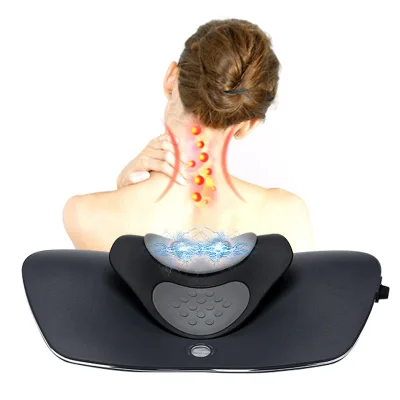
The core keyword "heating kneading neck massager" identifies a specific category of therapeutic devices designed to alleviate musculoskeletal tension through combined thermal and mechanical stimulation. Based on the available product data, these devices are engineered to target specific anatomical regions, with the neck and shoulder being the primary application points. The fundamental operating principle involves the integration of two distinct modalities: mechanical kneading and thermal therapy. The mechanical action is often described as "kneading" or "massage," utilizing specific heads or components to simulate human hand movements. In some configurations, this is augmented by pulse technologies or vibration intensity adjustments, where the frequency of vibration can be altered to suit user preference.
The thermal component is a critical differentiator in this product class. The supplied facts indicate that these units operate within specific temperature ranges, typically cited as 38/42±3°C or 40/43/45±3°C. This precise thermal control is essential for safety and efficacy, ensuring the heat penetrates deep into muscle tissue without causing surface burns. The heating function is often paired with other therapeutic claims such as fatigue elimination, metabolism increasing, and adjuvant therapy. While some models focus solely on the neck, others expand their applicability to include the waist and legs, suggesting a modular design or a broader ergonomic scope. The device type is consistently categorized as "Electric," requiring an internal power source and a charging mechanism to function independently of a direct wall outlet during use.
Technical Specifications and Performance Parameters
When evaluating potential suppliers, buyers must scrutinize the technical specifications that define the device's operational limits and user experience. The power system is a primary area of concern. The data reveals a variance in battery capacities, with observed models featuring 950mAh or 2200mAh units. The charging time is a significant factor for logistics and user convenience, with observed ranges extending from a maximum of 90 minutes to 180 minutes. Correspondingly, the working time—the duration the device can operate on a single charge—varies from a minimum of 60 minutes to over 150 minutes. These figures directly impact the product's suitability for travel or extended home use.
The electrical input requirements are standardized in the observed data, with an input voltage of 5V/1A being a common specification. This suggests compatibility with standard USB power sources, which is a favorable trait for modern procurement. The operational patterns are also a key technical differentiator. One observed model lists a "Pattern" count of 16, indicating a high degree of programmability for the massage intensity and rhythm. Furthermore, the auto-timer feature is a standard safety mechanism, with a 15-minute automatic shut-off observed in the data. This prevents overheating and ensures user safety during unattended operation.
Physical dimensions and packaging are equally critical for supply chain planning. The product standards list varying dimensions, such as 94151.6180mm, 270260120mm, and 400150380mm. These variations suggest a range of form factors, from compact, portable units to larger, pillow-style devices. Packaging data indicates options ranging from individual color boxes to bulk carton shipments, with specific quantities like 30 pieces per carton noted. Buyers must verify if the "Color Box" packaging aligns with their retail requirements or if they require plain cartons for private labeling. The component list highlights the "Massage Head" as a critical part, implying that the durability and material of this specific component will heavily influence the product's lifespan and tactile feel.
Compliance, Certification, and Safety Standards
In the B2B procurement of electronic wellness devices, compliance is non-negotiable. While the supplied product facts do not explicitly list specific certification bodies (such as CE, FCC, or RoHS), the presence of electrical components, heating elements, and batteries necessitates rigorous verification. Buyers must confirm that the supplier has conducted safety testing for the heating elements, ensuring they do not exceed the stated temperature tolerances (e.g., 45±3°C) under fault conditions. The battery specifications, particularly the 3.7V and 2200mAh ratings, require compliance with international shipping regulations for lithium-ion batteries, which are often classified as hazardous materials.
The product origin is listed as China, specifically the Fujian province. This region is a known manufacturing hub for electronics, but it also requires buyers to be vigilant about quality consistency. The "Standard" attribute in the data lists dimensions rather than safety certifications. This implies that the physical size is a standard metric, but the safety standards must be verified separately. Buyers should request documentation proving that the device meets the electrical safety standards of the destination market. For instance, if the product is destined for the European Union, the supplier must provide evidence of CE marking. If the destination is the United States, FCC certification for electromagnetic interference and UL or ETL listing for electrical safety are essential.
Furthermore, the claim of "adjuvant therapy" and "cosmetology" functions touches upon regulatory boundaries. In many jurisdictions, devices making medical claims must undergo more stringent approval processes than general wellness products. Buyers must ensure that the marketing language used by the supplier does not inadvertently classify the device as a medical instrument if it is intended for general consumer use. The "Auto Timer" and temperature controls are safety features that should be validated through third-party testing to ensure they function reliably over the product's lifecycle. Without explicit certification data in the source facts, the procurement strategy must prioritize suppliers who can provide up-to-date test reports and compliance documentation upon request.
Cost Drivers and Pricing Dynamics
The pricing for heating kneading neck massagers is influenced by a complex interplay of technical specifications, packaging, and order volume. The observed price range in the market spans from $1.15 to $180 USD, a variance that reflects the vast difference between basic, unbranded models and premium, feature-rich devices. The lower end of the spectrum likely corresponds to units with smaller battery capacities (e.g., 950mAh), fewer massage patterns, and simpler packaging. Conversely, the higher price points are associated with advanced features such as voice broadcast capabilities, EMS (Electrical Muscle Stimulation) integration, larger battery capacities (2200mAh), and more sophisticated heating controls.
Order Volume (MOQ) is another significant cost driver. The observed MOQ range is 1 to 1000 units. Suppliers offering an MOQ of 1 are typically trading companies or retailers catering to small buyers, often at a higher per-unit cost. Suppliers with an MOQ of 1000 are likely manufacturers offering direct factory pricing, which can significantly reduce the unit cost but requires a larger capital outlay. The customization availability is a critical factor in cost structure. While customization is listed as "Available," this usually incurs additional tooling costs for molds, packaging design, and software programming for unique massage patterns.
Packaging costs also play a role in the final landed cost. The data shows a mix of "Box Package" and "Carton" options, with specific configurations like "1PC/Color Box" and "30PCS/Carton." Customized color boxes with branding will increase the unit cost compared to standard white boxes. Additionally, the size of the product affects shipping costs. Larger units, such as those with dimensions of 400150380mm, will incur higher freight charges per unit compared to compact models. Buyers must calculate the total cost of ownership, including freight, duties, and packaging, rather than focusing solely on the ex-works price.
Supplier Evaluation and Quality Control Protocols
Evaluating suppliers for this product category requires a multi-faceted approach that goes beyond price comparison. Given the origin in Fujian, China, buyers should verify the supplier's manufacturing capabilities. The presence of specific model numbers like "BL-4306," "kfl," and "uNeck-9817" suggests that the supplier has an established production line with defined SKUs. However, the existence of a model with "000mm" dimensions in the data indicates a potential data entry error or a placeholder, which serves as a red flag for the supplier's attention to detail. Buyers should prioritize suppliers who can provide accurate, consistent, and verifiable product data.
Quality control (QC) is paramount for electronic devices with heating elements. Buyers should implement a rigorous QC protocol that includes pre-production sample approval, in-line production checks, and pre-shipment inspections. The "Massage Head" component, identified as a key part, should be inspected for material quality and durability. Since the device relies on a battery and heating element, functional testing is essential. This includes verifying the charging time, working time, and temperature accuracy against the stated specifications (e.g., 38/42±3°C). The "Auto Timer" function must be tested to ensure it shuts off reliably after 15 minutes.
The "Customization" attribute suggests that the supplier is open to OEM/ODM services. Buyers should assess the supplier's flexibility in modifying the product design, such as changing the massage patterns, adjusting the battery capacity, or altering the packaging. A capable supplier will have a dedicated R&D team to support these changes. Additionally, the "Suitable for" attributes, such as "Office Workers" and "White Collar," indicate that the product is marketed towards a specific demographic. Buyers should ensure that the supplier understands this target audience and can tailor the product design and marketing materials accordingly.
Typical Applications and Market Positioning
The market positioning of heating kneading neck massagers is driven by the increasing prevalence of sedentary lifestyles and the associated rise in musculoskeletal disorders. The observed "Suitable for" attributes, specifically "Office Workers" and "White Collar," highlight the primary target demographic. These individuals often suffer from neck and shoulder tension due to prolonged computer use. The device's ability to provide "Fatigue Elimination" and "Metabolism Increasing" effects aligns well with the needs of this demographic seeking relief and wellness solutions.
The functional versatility of these devices expands their application beyond the neck. Some models are designed for the "Waist" and "Legs," making them suitable for a broader range of users, including those with lower body pain or those seeking general relaxation. The "Heating" and "Kneading" functions are particularly effective for warming up cold muscles and breaking down tension knots. The inclusion of "EMS" and "Voice Broadcast" in some models adds a layer of sophistication, appealing to tech-savvy consumers who value advanced features.
The "Massage Pillow" configuration, as indicated by one of the product names, suggests a stationary application where the device is placed on a chair or sofa. This contrasts with the portable "Neck Massager" form factor, which is designed for on-the-go use. Buyers should consider the intended use case when selecting a supplier. For corporate wellness programs, the portable neck massager might be more appropriate. For home use or spa settings, the massage pillow or larger units with extended working times might be preferred. The "Pattern" count of 16 in some models offers a high degree of customization for users, allowing them to switch between different massage intensities and rhythms to suit their specific needs.
Long-Term Procurement and Supply Chain Considerations
Sourcing heating kneading neck massagers is not a one-time transaction but a long-term partnership that requires careful planning. The "Customization" availability is a key enabler for long-term success, allowing buyers to differentiate their products in a crowded market. However, customization comes with risks, such as longer lead times and higher initial costs. Buyers should negotiate clear terms regarding tooling costs, minimum order quantities for customized runs, and intellectual property rights.
The "Battery" and "Charge Time" specifications are critical for long-term product performance. Lithium-ion batteries degrade over time, and buyers should inquire about the battery cycle life and warranty terms. A supplier that offers a robust warranty and replacement policy for battery failures will be more valuable in the long run. Additionally, the "Working Time" of the device impacts customer satisfaction. A device that fails to meet the advertised 60-minute or 150-minute working time will lead to high return rates and negative reviews.
Logistics and inventory management are also important considerations. The "prod_packing" data shows variations in packaging, from individual boxes to bulk cartons. Buyers should optimize their packaging strategy to minimize shipping costs while maintaining product integrity. The "Standard" dimensions provided in the data can be used to calculate container loading efficiency, which is crucial for reducing freight costs. Finally, buyers should monitor the "prod_origin" and ensure that the supply chain remains stable. Political or economic changes in the manufacturing region can impact lead times and costs, so diversifying suppliers or maintaining safety stock is a prudent strategy.
FAQs
What are the typical temperature settings for these devices?
The devices typically operate within specific temperature ranges like 38/42±3°C or 40/43/45±3°C. This precise thermal control ensures deep muscle penetration while preventing surface burns during use.
How long does the battery last on a single charge?
Working time varies by model, with some lasting at least 60 minutes and others up to 150 minutes. Battery capacities range from 950mAh to 2200mAh depending on the specific unit selected.
Can I customize the packaging for bulk orders?
Customization is available for various product attributes including packaging. Buyers can choose between individual color boxes or bulk carton shipments with specific quantities per container.
Which anatomical parts do these massagers target?
Primary application points include the neck and shoulder regions. Some models also expand their applicability to include the waist and legs for broader therapeutic coverage.
What is the maximum charging time required?
Charging times range from a maximum of 90 minutes to 180 minutes depending on the battery capacity. Most units utilize a standard 5V/1A input voltage for compatibility.
How many massage patterns are typically available?
Some observed models feature up to 16 distinct patterns for intensity and rhythm variation. These patterns often combine mechanical kneading with pulse technologies for diverse user experiences.